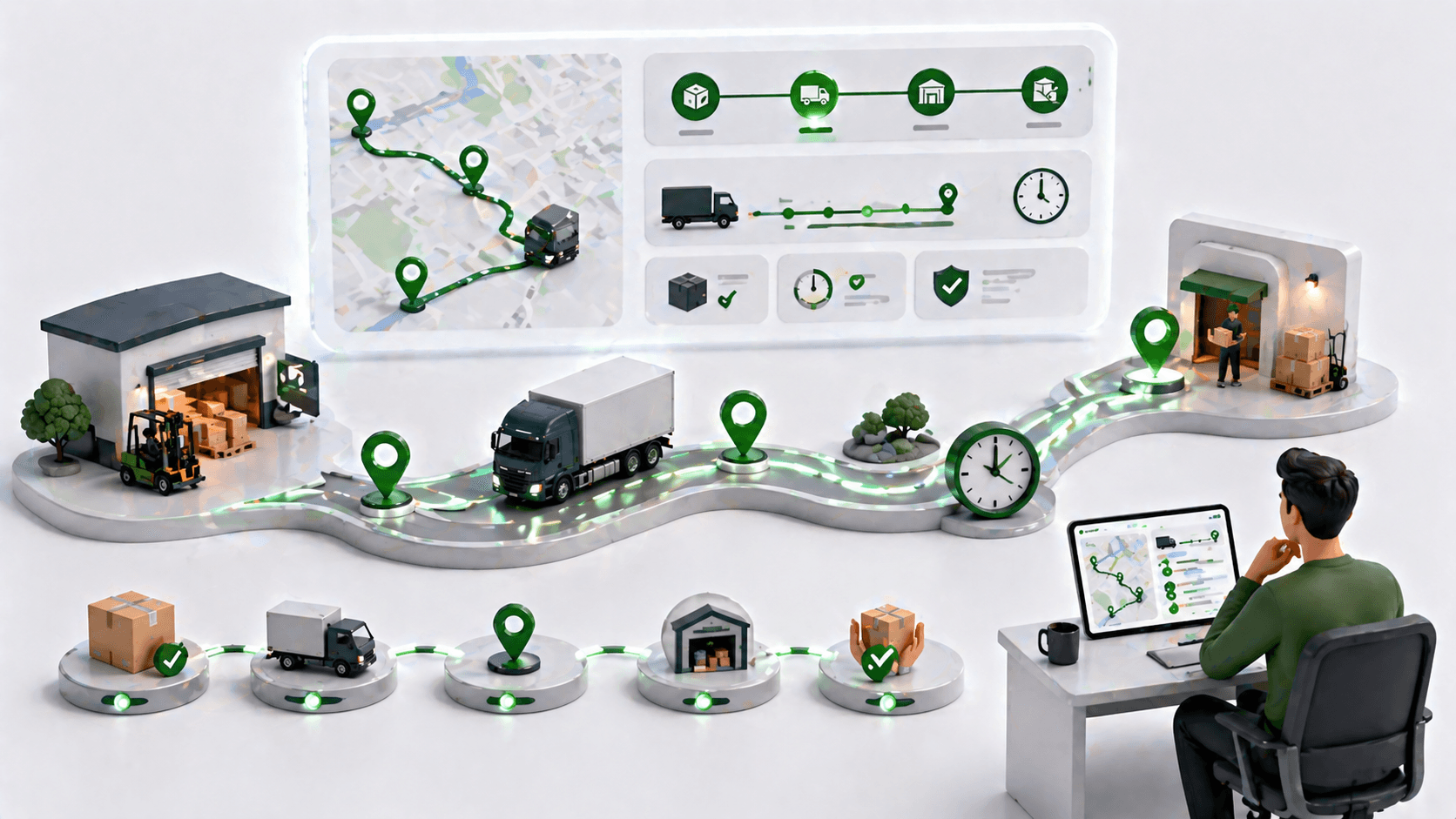
Better coordination in freight would look like a system where visibility does not stop at connection. It would mean that once parties are aware of each other, they can move through the process with more clarity, less ambiguity, and fewer avoidable delays. In practice, better coordination is not just about more interaction. It is about more intelligible interaction.
Why freight coordination is often weaker than it appears
Freight systems may look connected on the surface because information moves and parties can reach each other. But coordination is stronger than communication alone.
A market may still be weakly coordinated if:
- process state is hard to interpret
- suitability remains unclear
- expectations are poorly aligned
- key information is scattered
- next steps are under-specified
- users rely on repeated clarification just to move forward
This is why visibility alone does not solve coordination.
What better coordination should improve
A stronger freight coordination layer should improve at least four things:
Process clarity
Users should understand what stage they are in and what that stage means.
Expectation alignment
Each side should have a clearer sense of what the other side needs, knows, and is likely to do next.
Information quality
The platform should reduce fragmentation and improve how relevant data is surfaced and interpreted.
Decision speed
Users should be able to move forward faster because they have more usable information and less ambiguity.
These are not luxury upgrades. They are core infrastructure improvements.
Why better coordination is different from more communication
It is possible to increase communication while still having weak coordination. More messages, more calls, and more updates do not automatically mean the system is working better.
Better coordination means the communication burden itself becomes lighter because the platform has improved shared understanding.
That means users need fewer repetitive exchanges just to establish basic clarity.
What better freight coordination might feel like to users
To a user, better coordination would likely feel like:
- fewer unclear moments
- fewer repeated confirmations
- stronger visibility into status and suitability
- more confidence about what happens next
- lower friction in moving from option to action
In other words, a better system would feel less improvisational.
Why this matters for both sides of the market
Better coordination helps load owners because it reduces uncertainty and improves decision readiness.
It helps transport-side participants because it reduces wasted motion and improves the quality of engagement.
It helps the platform because clearer coordination improves trust, retention, and long-term usefulness.
This is one of the reasons coordination should be treated as product infrastructure rather than only as operational cleanup.
Why freight needs more than exposure
Freight does not only need connectedness. It needs systems that make connectedness work better.
That means stronger:
- visibility
- process logic
- trust interpretation
- expectation framing
- user-side decision support
A platform that stops at exposure still leaves too much of the real work unresolved.
Why this matters for Tasio
Tasio is built around the idea that freight coordination should become more visible, more manageable, and more useful. Its role is not just to let participants see each other. It is to help the market function with better process understanding and lower friction.
That is what better coordination in freight should mean in practice.
Better coordination in freight would look like clearer process visibility, stronger expectation alignment, more useful information flow, and lower decision friction. It is not just about making connections possible. It is about making those connections more workable. That is where real platform value starts to emerge in logistics.