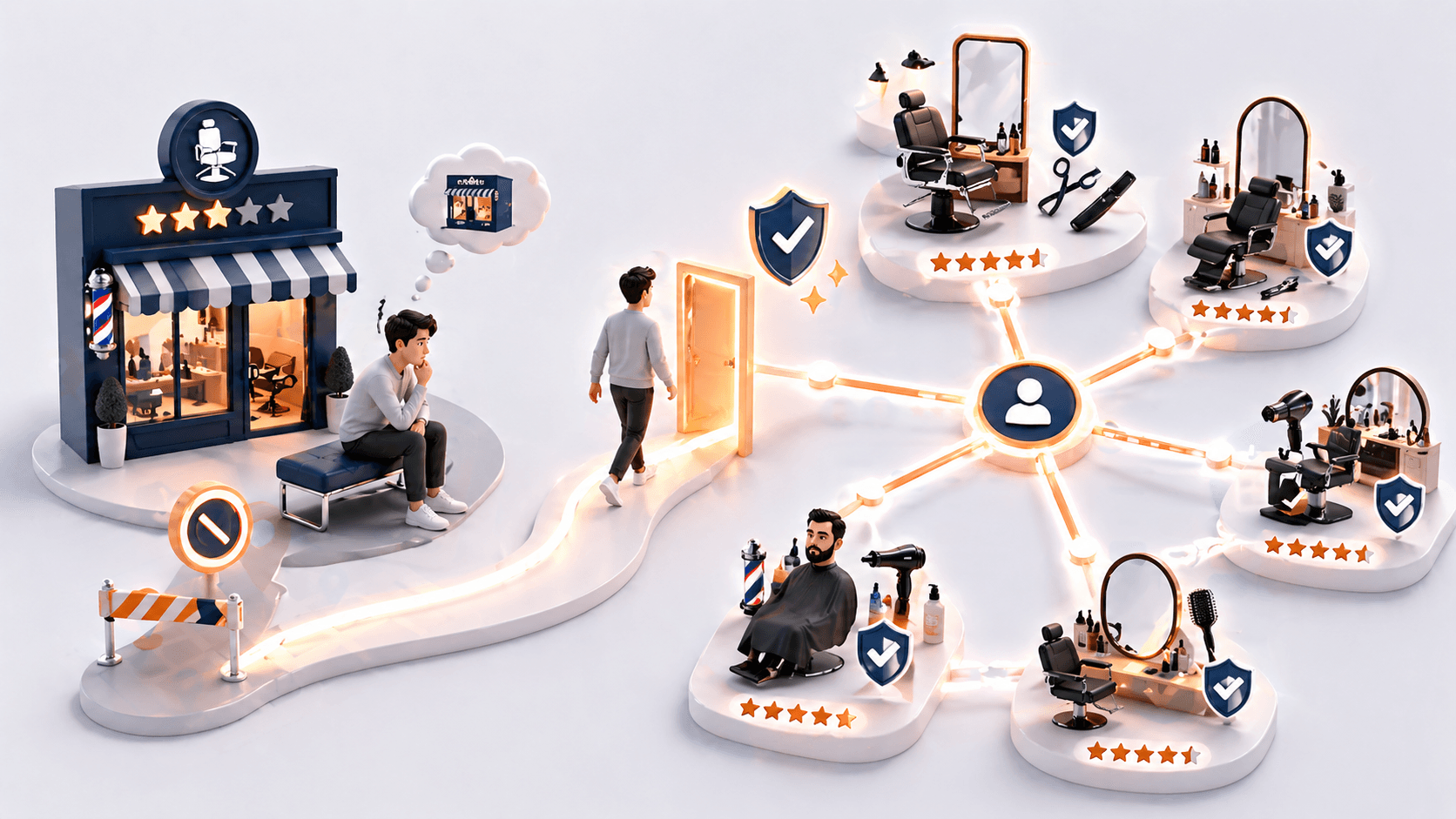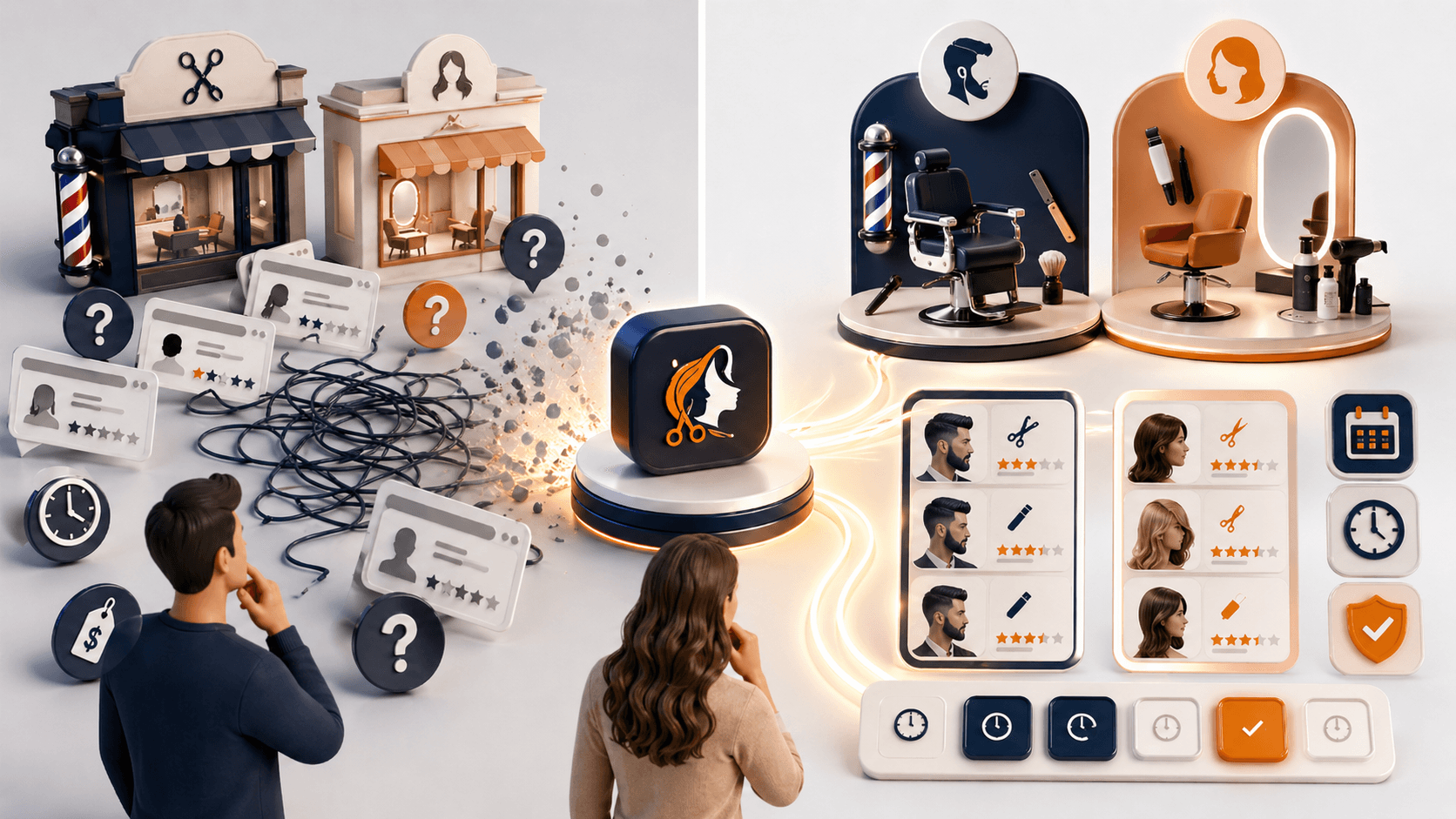
We're building BarberYou because personal care booking still carries too much uncertainty for a category people use all the time. Even when users can find shops online, they often cannot clearly understand price, service detail, timing, or service-level trust before making a decision. The category is digitally visible, but not yet digitally clear enough.
Why this category still feels more confusing than it should
People book haircuts, grooming services, and salon appointments regularly. These are not rare or highly unusual needs. Yet the decision process often remains fragmented.
Users may still need to:
- message for price
- ask how long a service takes
- confirm whether a slot is really available
- guess which reviews actually matter
- trust the business name more than the service details
That means the category still contains avoidable friction.
Why this is not just a booking problem
At first glance, the category may look like a scheduling problem. But the deeper issue is that the user often has to make a decision before the key information is clear.
The problem is not merely: "How do I reserve a time?"
It is also: "What am I reserving, under what conditions, and how confident should I feel about it?"
That makes this a discovery-and-trust problem, not just a calendar problem.
What feels underbuilt in today's experience
Several parts of the typical experience are often weaker than they should be:
- price transparency
- service-level review quality
- appointment duration clarity
- provider-level confidence
- booking predictability
- comparison between options
When these are weak, users either settle for familiarity or spend extra time trying to reduce risk manually.
Why familiarity dominates too much
Many people return to the same shop not only because they are loyal, but because trying a new place feels risky. That is often a platform failure rather than a purely consumer preference.
A better platform should lower the risk of discovery by making new choices easier to understand. If a user cannot evaluate alternatives clearly, then the market remains artificially narrow.
Why better structure helps both users and businesses
Better structure is not only good for consumers.
It can also improve conditions for businesses by creating:
- better expectation matching
- clearer booking intent
- less repetitive back-and-forth
- more accurate service selection
- more transparent decision conditions
That means a stronger platform can improve the quality of bookings, not just the quantity.
Why Kapseller sees this as a strong platform opportunity
Kapseller focuses on markets where discovery and coordination still rely on too much ambiguity. Personal care is one of those markets.
The category has:
- frequent intent
- repeat usage
- strong local decision-making
- high trust sensitivity
- service-level complexity
That makes it a strong candidate for better matching infrastructure.
BarberYou is being built around that thesis.
We're building BarberYou because personal care booking still leaves too much uncertainty around price, timing, service quality, and trust. The category is active, but the decision layer remains weak. BarberYou is meant to improve that by making service discovery more structured and booking decisions more confident.