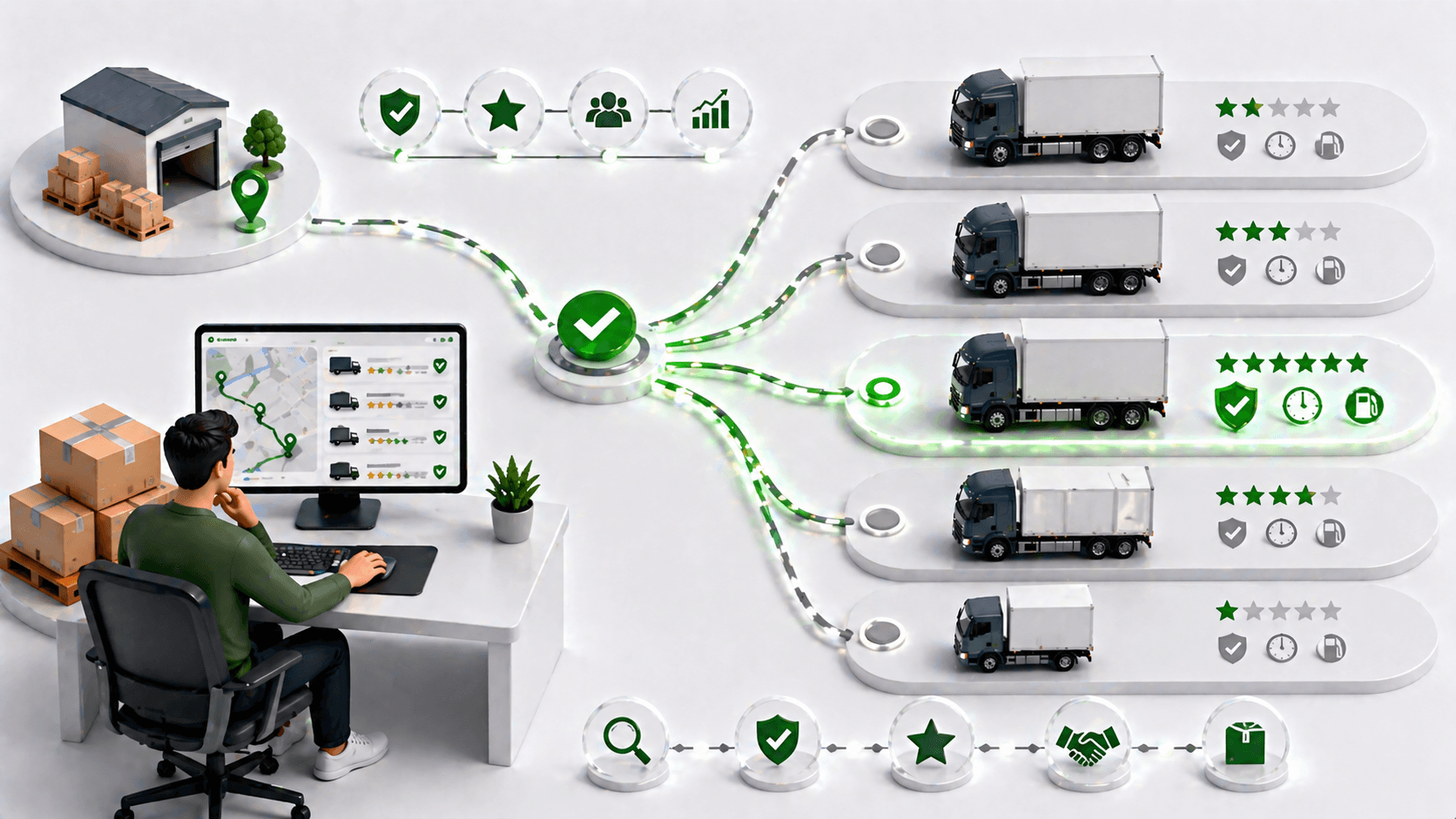
Load owners should have more visibility and more voice because they are not passive participants in logistics. They are central decision-makers whose choices shape timing, cost, reliability, and operational outcomes. If logistics platforms want to improve coordination quality, they need to give load owners better information and a stronger role in how decisions are made.
Why load owners are often under-supported
In many logistics systems, visibility is built more around listing capacity than around helping load owners judge it properly. That means load owners may see options, but still lack enough clarity on:
- which options are truly suitable
- what level of confidence each option deserves
- what tradeoffs exist between alternatives
- what is realistically actionable right now
- how the process is evolving
This creates a gap between having access and having usable decision support.
Why visibility matters so much for load owners
Load owners often carry the business consequences of uncertainty. If coordination weakens, they may absorb:
- timing risk
- communication delays
- service variability
- operational disruption
- higher downstream costs
That means visibility is not a convenience feature. It is part of risk management.
Better visibility helps load owners answer questions like:
- What can actually happen next?
- Which options are worth serious consideration?
- Where is the uncertainty coming from?
- What information is still missing?
Those answers materially improve decision quality.
What "more voice" means in practice
More voice does not necessarily mean more noise or more bureaucracy. It means that the platform should reflect load-owner needs more clearly in how information, options, and coordination are structured.
That can include:
- better comparison tools
- stronger visibility into relevant criteria
- clearer state updates
- more meaningful signaling around fit and reliability
- stronger influence over how options are interpreted and evaluated
A platform that ignores the decision needs of load owners leaves too much of the market under-explained.
Why weak visibility leads to weak decisions
When visibility is shallow, load owners often have to compensate manually. They may spend more time:
- asking follow-up questions
- validating assumptions
- rechecking availability
- translating scattered information into action
This slows decisions, increases friction, and weakens trust in the platform's usefulness.
A logistics platform should reduce that burden, not preserve it.
Why this is also a market-design issue
Markets work better when both sides have meaningful clarity. If one side sees more structure and the other sees mostly ambiguity, coordination becomes unbalanced.
Giving load owners stronger visibility and more voice can:
- improve match quality
- reduce preventable friction
- create stronger trust in the platform
- make decisions more evidence-based
- improve long-term market usability
This is not just about fairness. It is about platform performance.
How this relates to Tasio
Tasio is built around the idea that logistics coordination should be more visible and more manageable. That includes treating load owners not as passive request creators, but as users who need stronger decision conditions.
A better logistics platform should help load owners:
- understand options more clearly
- evaluate tradeoffs more confidently
- navigate coordination with less ambiguity
That is part of what stronger logistics infrastructure should do.
Load owners should have more visibility and more voice because they are central to logistics decisions, not peripheral to them. Better visibility helps them reduce uncertainty. More voice helps the platform reflect what actually matters in decision-making. Strong logistics systems should support both.