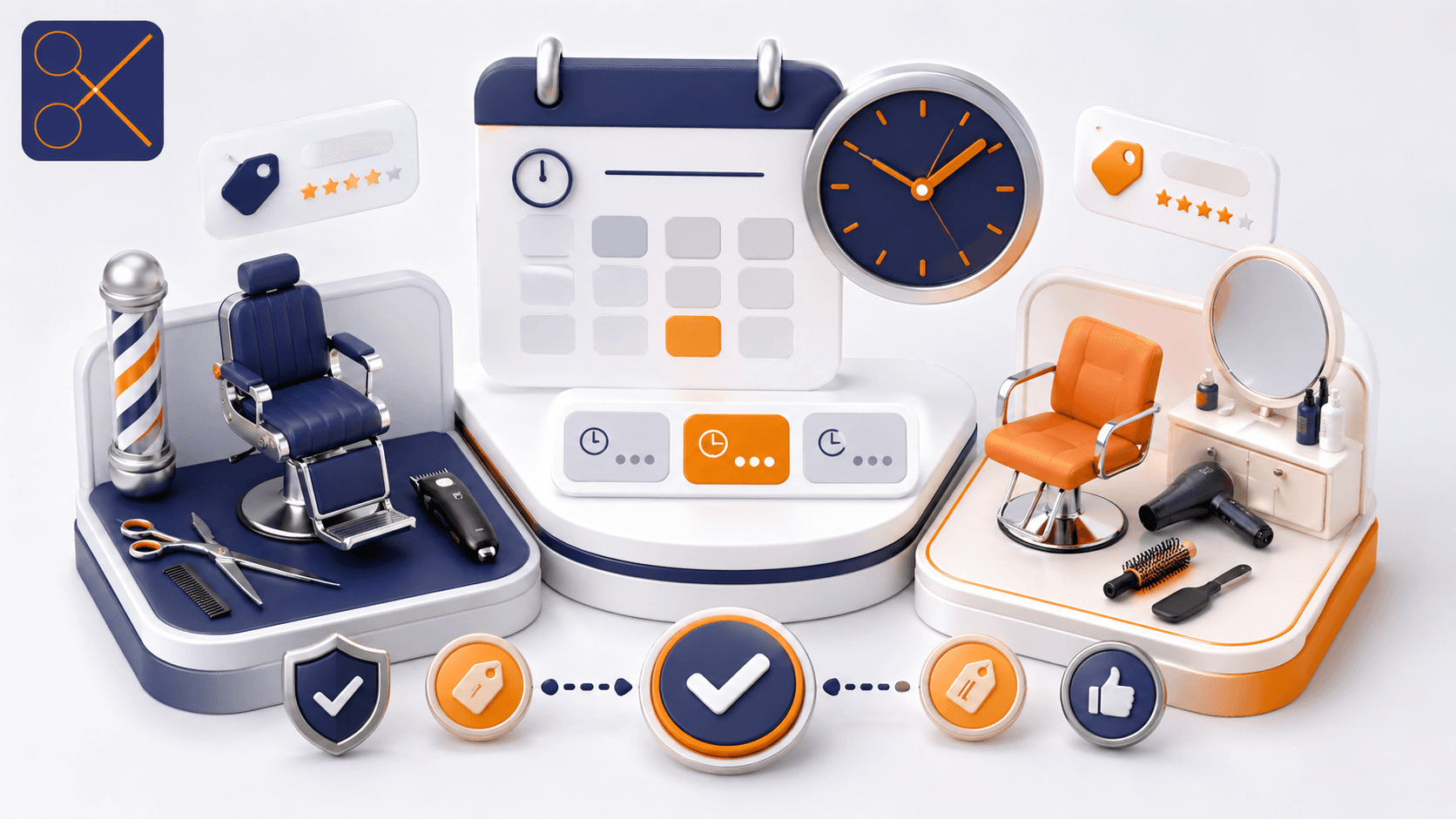
Customers should see prices and time slots before booking because these are two of the most important decision signals in any reservation flow. If users do not know what they will pay or when they can actually book, the experience becomes slower, less trustworthy, and more dependent on unnecessary back-and-forth.
Why price visibility matters early
Price is not a minor detail to reveal late. It is one of the first filters users apply when deciding whether to continue.
When price is hidden, several things happen:
- uncertainty increases
- trust decreases
- comparison becomes harder
- expectations become weaker
- users may hesitate before engaging
Transparent pricing does not just help with budgeting. It helps users understand the decision itself.
Why time-slot visibility matters just as much
Availability is part of fit. A great option is not useful if it cannot be booked at a workable time.
Time-slot visibility helps users answer:
- Is this realistic for my schedule?
- Do I need to contact the business just to find out?
- Is this option actually available soon enough?
- Can I compare based on real timing, not assumptions?
This makes time-slot visibility a decision feature, not just a scheduling feature.
What happens when both are hidden
When users have to ask for price and then ask again for timing, the booking flow becomes much more fragile.
That creates:
- extra communication load
- slower decisions
- lower trust
- more abandoned intent
- more operational noise for businesses
In other words, hidden price and hidden availability often shift avoidable effort onto both sides.
Why this matters especially in personal care
Personal care is often a repeat-use category with strong time sensitivity. Users want quick clarity.
They are not only deciding: "Do I like this place?"
They are also deciding:
- Can I afford this service?
- Can I fit it into my schedule?
- Does this feel predictable enough to book?
If those answers are delayed, the entire experience becomes less efficient.
Why transparent booking improves platform quality
A good platform should help users move from interest to action with fewer unknowns.
Showing prices and time slots early improves:
- trust
- conversion quality
- comparison logic
- expectation matching
- decision speed
This is not just good UX. It is better infrastructure for booking.
Why this helps businesses too
Businesses benefit from early clarity as well.
When prices and availability are visible:
- users come in with more accurate expectations
- fewer exploratory messages are needed
- bookings are more intentional
- operational planning improves
- friction around routine questions decreases
That makes transparency more than a user benefit. It is also a workflow benefit.
Why BarberYou treats this as fundamental
BarberYou is built around the idea that better personal care booking starts before the booking itself. Users need stronger decision conditions before they commit.
That is why price transparency and time-slot visibility are treated as foundational, not optional. If those two signals remain unclear, the platform is still leaving too much of the decision burden on the user.
Customers should see prices and time slots before booking because those signals shape trust, relevance, and decision speed from the start. Strong booking systems do not make users work to uncover basic conditions. They surface them clearly, early, and in ways that support better choices.